

What's New
Displaying results 1081 - 1090 of 4924
Resource | Publications,
Countries in Asia have typically addressed illicit drug supply and use with harsh punishments, including compulsory treatment and the death penalty. The region has long espoused the goal of creating a drug-free society, a goal that has been abandoned in other parts of the globe for being infeasible.
Like many other places in the world, there are emerging discussions in Asia about policies to reduce drug use and trafficking. This report aims to help inform policymakers and the public by describing the illicit drug situation for selected Association of Southeast Asian Nations + 3 countries (China, Japan, and South Korea).
Resource | Publications,
The drug policy reform movement continues to strengthen and diversify with many new players joining the calls for a serious re-think of repression and punishment as instruments of drug control. Repressive drug control measures are increasingly being understood as a form of state violence that serves to deepen and entrench structural inequalities which has garnered stronger interest in challenging current drug policies from other social movements such as those working on racial inequality, women’s rights, indigenous rights, LGTIQ+ rights to prison abolition and beyond. Building cross-movement solidarity on key human rights and social justice issues is more important than ever in the current troubling geo-political context and will be a core focus of the IDPC Secretariat in the coming years.
Resource | Publications,
In this advocacy note, IDPC discusses the WHO’s strategic role in drug policy, including progress made and ongoing gaps and challenges, and calls on the WHO and its governing bodies to engage in a more progressive and systematic way in various aspects of global drug policy to ensure more coherence with the UN system on drug policy, health, human rights, and the achievement of the Sustainable Development Goals.
Resource | Publications,
This report is based on a desk review of United Nations and open-source material on the death penalty, including OHCHR studies and United Nations resolutions and human rights mechanisms. It builds on material from the 2018 Bangkok seminar. This report also presents recent global trends in death penalty and drug-control matters, a summary of the applicable international human rights norms and standards, and recent developments in legislation and criminal justice responses related to the death penalty and drug control in South-East Asia.

Resource | Publications,
The World Health Organization (WHO) convened a Guideline Development Group (GDG) meeting from 29 to 31 July 2019 to review global guidance on contraceptive eligibility for women at high risk of HIV acquisition to and determine whether revisions to the fifth edition of the Medical eligibility criteria for contraceptive use (MEC) were needed. The issue was deemed critical, particularly for sub-Saharan Africa, given the high lifetime risk of acquiring HIV alongside the importance of hormonal contraception in offering women and adolescent girls’ choice and in reducing their risk of unintended pregnancy, a common threat to the health, well-being and lives of women and adolescent girls.
Resource | Publications,
National HIV prevalence is estimated at 0.9%. It is estimated that there are 48,000 people living with HIV in PNG in 2017. Of these, around 3,000 are estimated to be new infections from the same year with sexual transmission being the leading transmission route. HIV prevalence in PNG is not uniform. The recent integrated bio-behavioural surveillance (IBBS) study revealed a prevalence of 14.9% among female sex workers and 8.5% among MSM and transgender people in NCD. It is also higher than the national average in the Highlands region and National Capital District. Figure 1 shows the distribution of HIV by provinces.
Resource | Publications,
Significant progress has been made to curb the HIV/AIDS epidemic in PNG. However, the country has the highest HIV prevalence and rate of new infections in the Asia and Pacific region. No nationwide population-based survey has been conducted to measure the true burden of the disease in the country. Estimates based on anti-natal care (ANC) attendances using Spectrum put the prevalence of HIV among adults 15 – 49 years at 0.9% (0.7 – 1.0) in 2017.
Resource | Guidelines,
These guidelines provide recommendations and good practice guidance on the optimal approach to diagnosing cryptococcal meningitis, strategies for preventing invasive cryptococcal disease through cryptococcal antigen screening and pre-emptive fluconazole therapy, treating cryptococcal meningitis with combination antifungal therapy regimens, preventing, monitoring and managing amphotericin B drug toxicity, recommendations against adjunctive therapy with systemic corticosteroids and recommendations on the timing of antiretroviral therapy (ART) initiation.
Resource | Fact Sheets,
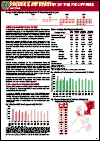
In May 2019, there were 1,092 newly confirmed HIV-positive individuals reported to the HIV/AIDS & ART Registry of the Philippines (HARP). This was higher compared with the same period last year (950). Seventeen percent (190) had clinical manifestations of advanced HIV infection (WHO clinical stage 3 or 4) at the time of diagnosis.
Resource | Publications,
The guide is intended for use by policymakers, programme managers and service providers, including community-based organizations, at the national, regional or local levels, who undertake to address HIV prevention, treatment and care. It also provides useful information for development and funding agencies and for academia.