

What's New
Displaying results 1101 - 1110 of 4924
Resource | Publications,
This paper details the results of a survey with 84 frontline welfare workers in seven Pacific countries. The results offer a snapshot of the context of sexual exploitation of children (SEC) in the Pacific and key issues affecting children’s vulnerability, ability to access support services, and frontline worker’s ability to provide support to them. All participants worked as welfare service providers directly managing cases that included children. The online survey consisted of approximately 60 multiple-choice questions and a small number of short open-answer questions. Many participants shared additional observations and illustrative anecdotes throughout the survey that further shed light on the challenges and potential opportunities for action and progress in this area. It should be noted that the data is not statistically representative of the experiences of all frontline workers in the region, and cases described are merely recalled estimates rather than detailed administrative counts.
Resource | Publications,
The objective of this Checklist is to support women living with HIV and community activists who care about the rights of women living with HIV to guarantee effective implementation of the WHO Consolidated guideline on sexual and reproductive health and rights of women living with HIV. This is important given that uptake of the guideline includes the meaningful engagement of women living with HIV in all their diversity.
Resource | Publications,
WHO develops global norms and standards for STI treatment and prevention, strengthens systems for surveillance and monitoring, including those for drug-resistant gonorrhoea, and leads the setting of the global research agenda on STIs.
Resource | Publications,
Maternal mortality is unacceptably high. About 830 women die from pregnancy- or childbirth-related complications around the world every day. In 2015, 303 000 women died during and following pregnancy and childbirth. Almost all of these deaths occurred in low-resource settings, and most could have been prevented.
Resource | Guidelines,
The National Guidelines for HIV Care and Treatment in PNG are one of the many tools that have been developed to provide healthcare workers with guidance on various aspects of care and treatment. In this, the fifth edition of the Guidelines, there is much wider coverage of such areas as; Adult and Pediatric HIV management including adherence issues; Prevention of Parent-to-Child Transmission (PPTCT); Prophylaxis and Treatment of opportunistic infections (OIs); and management of co-morbidities.
Resource | Publications,
In 2018, Youth LEAD conducted many new projects and activities, which will be implemented in partnership with both global and regional networks. For instance, the regional consortium for the Robert Carr Fund grant turned into a global consortium, thereby opening doors and opportunities for collaboration.
Resource | Tools,
Compared with clinical or immunological monitoring, viral load provides an early and more accurate indication of treatment failure. Measuring viral load can help to distinguish between drug resistance and non-adherence when coupled with robust enhanced adherence counselling. Further, viral load can serve as a proxy measure for the risk of transmission and effectiveness of prevention interventions at both the individual and population levels.
Increasing scale-up of treatment monitoring approaches through viral load testing as well as infant diagnosis will be critical to ensure high-quality care and treatment as well as programmatic success.
Resource | Fact Sheets,
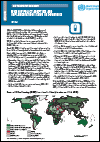
With the 2016 Consolidated guidelines on the use of antiretroviral drugs for treating and preventing HIV infection, WHO updated and launched new policy recommendations on the clinical and service delivery aspects of HIV treatment and care, and raised the bar to treat all people living with HIV. WHO has worked with countries to ensure uptake and implementation of these recommendations in support of the 90-90-90 targets.
This fact sheet present data for 194 WHO Member States – including 137 low- and middle-income countries – and 35 Fast-Track countries.
Resource | Publications,
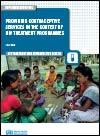
The publication provides information on contraceptive options and choice, the medical eligibility criteria for different methods of contraception for women and adolescent girls living with HIV and using antiretroviral therapy, a summary of the comparative effectiveness of contraceptive methods and contraceptive considerations at different stages of a woman’s life-course.
Resource | Publications,
After years of neglect, greater global attention is being paid to the increasing incidence of sexually transmitted infections (STIs). A recently published WHO report highlights that, annually, there are an estimated 376 million new cases of four curable STIs: chlamydia, gonorrhoea, syphilis and trichomoniasis. The need for greater focus on STIs has also been highlighted in the context of expanded use of pre-exposure prophylaxis (PrEP) for HIV prevention, where high STI prevalence at baseline and incidence during PrEP use have been observed. The epidemiological situation demands a call to action to ensure that these STIs are addressed, and that populations at risk have access to comprehensive STI prevention and care.
Integration of STI services and PrEP has challenges, but it also provides an opportunity not only to induce much- needed progress in STI control, but also to optimize broader sexual and reproductive health services for key, underserved and overlooked populations.