


What's New
Displaying results 491 - 500 of 4924
Resource | Publications,
Violence against women and children are linked. These harms share risk factors, including a lack of responsive institutions and weak legal actions against violence. These forms of violence are also both fueled by the harmful social norms that condone violent discipline, promote toxic masculinity, prioritize family reputation and blame victims – all of which perpetuate gender inequality. Intimate partner violence (IPV) and VAC often co-occur within spaces and relationships of trust, such as in the home or in schools. Evidence indicates that children in households affected by IPV are more likely than other children to experience violent discipline by both male and female caregivers. Further, witnessing IPV may have long-term health and social consequences similar to the impact of direct abuse.
Resource | Publications,
This annual report highlights UNDP's progress on its Gender Equality Strategy 2018-2021 and key achievements made in closing gender gaps in 2020. The report explores emerging trends and challenges that lie ahead for gender equality, including in the COVID-19 response and recovery. Learning from these lessons will be vital to accelerate progress towards gender equality and to achieve the 2030 Agenda.
Resource | Fact Sheets,
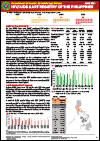
In June 2021, there were 1,496 confirmed HIV-positive individuals reported to the HIV/AIDS & ART Registry of the Philippines (HARP). This was two times higher compared to the same time period last year (490). The increase in the number of diagnosed HIV cases this month was due to the inclusion of delayed reports from previous months. Sixteen percent (232) had clinical manifestations of advanced HIV infection at the time of testing.
Resource | Guidelines,
The objectives of these guidelines are to provide updated, evidence-informed clinical and practical recommendations on the case management of people with symptoms of STIs; and to support countries in updating their national guidelines for the case management of people with symptoms of STIs. These guidelines include the management of symptomatic infections related to urethral discharge syndrome, including persistent urethral discharge syndrome; vaginal discharge syndrome, including persistent vaginal discharge; anorectal infection; genital ulcer disease syndrome; and lower abdominal pain syndrome. These guidelines are intended for programme managers for STI prevention and control at the national level and the health-care providers at the frontline – primary, secondary and tertiary health care.
Resource | Publications,
The new and updated WHO recommendations are intended to support countries to scale up access to and uptake of cervical cancer screening and treatment with quality modern technologies and thereby improve coverage of both screening and treatment and reduce cervical cancer disease and deaths.
This policy brief highlights the key features of the new recommendations on screening and treatment for cervical pre-cancer among women living with HIV, and includes programme considerations for implementation including service delivery, service integration and addressing barriers to access.
Resource | Publications,
Antiretroviral treatment optimization is a key pillar in the AIDS Free agenda to reach the goal of ensuring 95% of all infants and children have access to lifesaving treatment.
This policy brief outlines key considerations to facilitate effective transition to more clinically appropriate regimens as optimal antiretroviral medicines and dosage forms become available.
Resource | Publications,
This report describes the demographics, clinical presentation, clinical outcomes, and risk factors among people living with HIV (PLHIV) who have been hospitalized for suspected or confirmed COVID-19.

Resource | Guidelines,
The World Health Organization (WHO) uses the following working definition of self-care: Self-care is the ability of individuals, families and communities to promote health, prevent disease, maintain health, and cope with illness and disability with or without the support of a health worker. The scope of self-care as described in this definition includes health promotion; disease prevention and control; self-medication; providing care to dependent persons; seeking hospital/specialist/primary care if necessary; and rehabilitation, including palliative care. It includes a range of self-care modes and approaches. While this is a broad definition that includes many activities, it is important for health policy to recognize the importance of self-care, especially where it intersects with health systems and health professionals.
Resource | Publications,
WHO has set a global goal to eliminate HCV as a public health problem by 2030. WHO estimates that 58 million people had chronic hepatitis C virus (HCV) infection globally in 2019, and less than a quarter of them were diagnosed. New and innovative approaches are needed to accelerate progress toward the HCV elimination targets. Self-testing is one such approach.
These guidelines provide a new recommendation and guidance on HCV self-testing to complement existing HCV testing services in countries. These guidelines also highlight operational considerations to support strategic implementation and scale up of HCV self-testing.
Resource | Guidelines,
These consolidated guidelines on HIV prevention, testing, treatment, service delivery and monitoring bring together existing and new clinical and programmatic recommendations across different ages, populations and settings, bringing together all relevant WHO guidance on HIV produced since 2016. It serves as an update to the previous edition of the consolidated guidelines on HIV.
These guidelines continue to be structured along the continuum of HIV care. Information on new combination prevention approaches, HIV testing, ARV regimens and treatment monitoring are included. There is a new chapter on advanced HIV disease that integrates updated guidance on the management of important HIV comorbidities, including cryptococcal disease, histoplasmosis and tuberculosis. The chapter on general HIV care, contains a new section on palliative care and pain management, and up to date information on treatment of several neglected tropical diseases, such as visceral leishmaniasis and Buruli ulcer. New recommendations for screening and treating of cervical pre-cancer lesions in women living with HIV are also addressed in this chapter.