

What's New
Displaying results 451 - 460 of 4924
Resource | Publications,
The sixth annual report on Monitoring progress towards UHC and the health-related SDGs in the South-East Asia Region provides a comprehensive overview on where we are and what is needed to achieve the UHC and health-related SDGs. The report highlights progress in the areas of reproductive, maternal, neonatal and child health, communicable diseases, non-communicable diseases and health systems. This year’s report includes forecasts for progress likely to be achieved towards those health-related SDG indicators where we can model projections to 2030. A section of this report examines health equity and who is being left behind in the Region. The final part of the report provides Member States’ SDG profile, reporting on health and health-related SDGs. The information and analysis in the report can be utilized to sustain and accelerate progress towards Regional Flagship Priorities and the SDG targets.
Resource | Publications,
The WHO South-East Region in 2019 accounted for nearly a million missing TB patients from the estimated incidence. Active case-finding (ACF) or systematic screening for tuberculosis is an important tool to reach out to missing TB patients. When appropriately implemented, the activity is cost effective, helps to reduce diagnosis and treatment delays, and prevents the spread of the disease. This document presents an analysis of published ACF studies from the Region. It can be used by Member States for effective planning, implementation and monitoring of these activities.
Resource | Publications,
The Effects of the COVID-19 Pandemic on the HIV Response
Resource | Publications,
Achieving the global target to eliminate HIV transmission among men who have sex with men (MSM) faces additional challenges from the lack of effective and scaled intervention to address a part of the population who use drugs in sexual settings (colloquially known as chemsex). In this report, is intended to deliver a practical toolkit for community-based organisations (CBOs) who work to improve health outcomes for MSM, particularly in Asian countries. This manual provides the contextual information on chemsex practices among MSM in Asia and offers information and interventions to respond to the situation appropriately.

Resource | Fact Sheets,
In July 2021, there were 1,045 confirmed HIV-positive individuals reported to the HIV/AIDS & ART Registry of the Philippines (HARP) and were accounted to the total (89,153) reported cases since January 1984. Moreover, 12% (129) of individuals reported in July had clinical manifestations of advanced HIV infection at the time of testing. Ninety-six percent (1,005) of the reported cases were male. Of the total male cases, 2% (20) reported their gender-identity as female (transgender women) at the time of testing.

Resource | Publications,
This ‘In Focus: 2021’ summary outlines the strategic direction and progress in strengthening country health information systems, making data available as a global public good, delivering a measurable impact and using data to drive public health policy.

Resource | Publications,
The Strategic Plan 2018-2021 set out an ambitious agenda: to transform UNDP into a more nimble, innovative thought leader, more effective and efficient at delivering results, a trusted partner for countries in reaching the SDGs.
The Strategic Plan 2022-2025 continues in this direction, building on the progress of the last four years. It draws on assessments, evaluations and audits, and on the lessons of experience, including from COVID-19 response.
Resource | Publications,
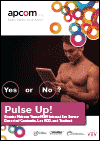
On the occasion of the 2021 International Youth Day, APCOM is delighted to launch its report Pulse Up! Young MSM Internet Sex Survey, covering three countries in Southeast Asia: Cambodia, Laos, and Thailand. Supported by ViiV Healthcare, the report aims to bring attention to the absence of data on young men who have sex with men (MSM) between 15-24 in the region as a major setback in the HIV response.
Resource | Publications,
The Philippines has been using HIV estimates to aid programmatic response since 2007. Results of the modelling and estimation have been used to determine the state and trend of the Philippines HIV epidemic, to set targets for the Health Sector Plan for HIV, forecast ARV stock requirements, and measure the accomplishment in the national HIV care cascade, among others.

Resource | Publications,
The COVID-19 has forced the Philippines to undergo several community quarantine restrictions to limit the spread of the new virus, hence limiting throughout the country. The limit in social mobility created a variety of barriers for the access of the community to HIV prevention, testing, and treatment services.
Understanding the magnitude of the COVID-19 impact on the Philippine HIV epidemic will be pivotal in mitigating its effects, strengthening current good practices, and diving into innovations in strategies.