

What's New
Displaying results 1031 - 1040 of 4924
Resource | Publications,
2018 was an extraordinary year for PMNCH, with the diversity of our work showcased at the 2018 Partners’ Forum. Other achievements included our work in a number of EWEC focus areas, country engagement, accountability, political engagement and resource mobilization. The Board and Executive Committee also adopted the PMNCH 2018-2020 Business Plan.
Resource | Publications,
The Implementing Rules and Regulations (IRR) shall prescribe guidelines, procedures and standards for the implementation of the mandates and objectives of R.A. No. 11166, and to ensure and facilitate compliance to its provisions.
Resource | Publications,
S&D are globally recognized as key barriers to an effective HIV response. S&D by health care providers towards PLHIV, as well as populations at higher risk of HIV exposure, such as people who inject drugs (PWID), men who have sex with men (MSM), female sex workers (FSW) and Transgender persons (TG), can impact whether people feel comfortable accessing services for HIV related testing care and treatment.
Resource | Publications,
The report describes the findings from S&D surveys on health care provider and PLHIV and HIV integrated biological and behavioral surveillance (IBBS) among female and male sex workers, men who have sex with men and transgender women. Also described within this report are the methodologies used to collect data
from 19 provinces and the extrapolation process of provincial level data to provide national estimates. Of additional importance is that the process of data collection and extrapolation involved national capacity building to ensure technical expertise exists at the country level for follow up S&D surveys of PLHIV, KP, and health care providers.
Resource | Publications,
Held only three years after the 2016 United Nations General Assembly Special Session (UNGASS) on drugs, the event was a critical moment for member states to define the next decade of UN drug policy. It was clear early on in this process that member states did not want to embark in lengthy negotiations for a new substantive policy document, and as a result most of the negotiations revolved around whether to focus the next 10 years of drug control on UNGASS implementation, or on a reaffirmation of the 2009 Political Declaration, or a mix of both. At the core of these discussions was a fundamental disagreement over whether or not to extend the 2009 goals to ‘significantly reduce or eliminate’ the illicit drug market, given the clear lack of progress towards achieving any reduction in the global drug trade.
Resource | Publications,
The United Nations Development Programme’s (UNDP’s) Strategic Plan 2018–2021 and its HIV, Health and Development Strategy 2016–2021 highlight the role UNDP can play in supporting governments to attain the SDGs. This includes addressing the structural barriers and discriminatory laws, policies and practices that marginalize vulnerable population groups, including people who use drugs. In June 2015, UNDP released a discussion paper reviewing the impacts of drug enforcement policies on public health, safety and security, and human rights of poor and marginalized populations.
Resource | Publications,
Child marriage is a global problem that cuts across countries, cultures, and religions. Around 650 million women and girls alive today were married as children. Unless we accelerate our efforts, 150 million more girls will be married by 2030.
Resource | Publications,
This paper and an associated expert consultation were developed to better understand the relationship between child marriage and HIV and its implications for policies and programming.
Resource | Publications,
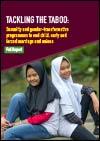
Tackling the Taboo focuses on the need to address patriarchal control of adolescent girls’ sexuality in the fight against child, early and forced marriage and unions, and highlights the vital role played by gender-transformative programmes. The report presents findings from a review of 23 organizations that work at the intersection of child marriage and sexuality, and includes three case studies that feature the work of grassroots organizations working in politically and culturally conservative contexts.
Resource | Fact Sheets,
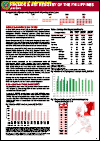
In June 2019, there were 1,006 newly confirmed HIV-positive individuals reported to the HIV/AIDS & ART Registry of the Philippines (HARP). Nineteen percent (194) had clinical manifestations of advanced HIV infection (WHO clinical stage 3 or 4) at the time of diagnosis.