



Publications on People Living With HIV (PLHIV)
Resource | Guidelines,
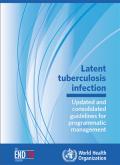
The consolidated guidelines are expected to provide the basis and rationale for the development of national guidelines for LTBI management, adapted to the national and local epidemiology of TB, the availability of resources, the health infrastructure and other national and local determinants.
Resource | Guidelines,
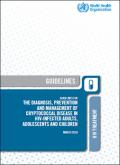
These guidelines provide recommendations and good practice guidance on the optimal approach to diagnosing cryptococcal meningitis, strategies for preventing invasive cryptococcal disease, treating cryptococcal meningitis, preventing, monitoring and managing amphotericin B drug toxicity, recommendations against adjunctive therapy and recommendations on the timing of antiretroviral therapy (ART) initiation.
Resource | Tools,
Each year we commemorate World TB Day on March 24 to raise public awareness about the devastating health, social and economic impact of tuberculosis (TB) and urge acceleration of efforts to end the global TB epidemic.
The aim of this campaign, starting on 19 March, the week of the World TB Day date, is to build overarching commitment and leadership at the highest level to End TB.
Resource | Guidelines,
This technical update provides public health officials with guidance on applying HIV incidence assays and testing algorithms for recent HIV infection in order to monitor the HIV epidemic and assess the impact of interventions.

Resource | Publications,
No one should ever be discriminated against because of their age, sex, gender identity, sexual orientation, disability, race, ethnicity, language, health (including HIV) status, geographical location, economic status or migrant status, or for any other reason. Unfortunately, however, discrimination continues to undermine efforts to achieve a more just and equitable world. Many people face discrimination every day based on who they are or what they do.
Resource | Guidelines,
This IDUIT Brief Guide for People who Use Drugs is intended to outline the key concepts of Implementing Comprehensive HIV and HCV Programs with People who Inject Drugs: Practical Guidance for Collaborative Interventions (the IDUIT) related to prevention, treatment and empowerment with regard to HIV and HCV, and point to how activists and professionals from among the community of people who use drugs might promote better policy and practice.
Resource | Publications,
Non-discrimination is a core human rights principle and obligation, but discrimination in health-care settings remains widespread and takes many forms. Discrimination is a barrier to accessing health and community services and prevents the attainment of universal health coverage. It leads to poor health outcomes and hampers efforts to end the aids epidemic and achieve healthy lives for all.
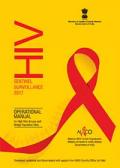
Resource | Tools,
The manual, published separately for (antenatal clinic sites) ANC and (high-risk groups) HRG & bridge population sites, describes the eligibility criteria and sampling process to be followed for surveillance among respective groups. The steps and precautions to be taken while collecting, drying, packing and transporting the specimens are also outlined in this manual and explained with the help of graphics wherever necessary.
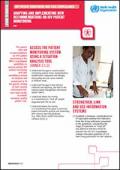
Resource | Publications,
The generic tools and recommendations for HIV patient monitoring in the WHO Consolidated guidelines on person-centred HIV patient monitoring and case surveillance should be adopted and customized to fit the specific setting of each country and programme; most importantly, to provide essential, quality patient care.
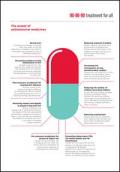
Resource | Infographics,
Infographic that summarizes the power and benefits of antiretroviral medicines.