

Publications on People Living With HIV (PLHIV)
Resource | Publications,
The guidance provides the rationale and the approach to expand differentiated ART delivery to populations of people living with HIV who previously may not have been considered “eligible” for ART delivery models for clinically stable clients.
Resource | Tools,
The manual was developed to provide planners and managers working with HIV men who have sex with men (MSM) programme prevention and support services with the necessary information to develop sympathetic, evidence-based and comprehensive HIV prevention and support services for MSM in the Middle East and North Africa (MENA) region. The resource is useful to both experienced programme implementers as well as those who are beginning to plan new HIV prevention and care services for MSM.
Resource | Publications,
Propelled by the introduction of powerful and life-saving antiretroviral medications, the increasingly bio-medicalized global HIV response challenges us to rigorously reimagine prevention. While this is a welcome development in the global response to HIV, access to medical interventions is hampered by the costs of medicines, healthcare, testing and monitoring, and the politics of funding.
Resource | Tools,
Positive Protection is a training manual to empower civil society organizations to protect the rights of women affected by HIV at health care settings in Nepal. It was developed by the United Nations Development Programme (UNDP), the Asia Pacific Network of People living with HIV (APN+) and the National Federation of Women Living with HIV and AIDS in Nepal, in partnership with UNAIDS.
Resource | Publications,
HSS 2016-17 highlights that the HIV epidemic continues to be heterogenic in India with varied HIV prevalence by location and population.
Resource | Fact Sheets,
According to MENAHRA, these are what we can do to improve adherence to treatment and access to services
Resource | Fact Sheets,
Facts on the HIV Surveillance in Nepal
Resource | Publications,
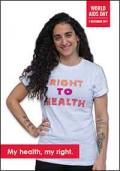
Everyone, regardless of who they are or where they live, has a right to health, which is also dependent on adequate sanitation and housing, nutritious food, healthy working conditions and access to justice.
Resource | Publications,
The assessment consisted of a descriptive cross-sectional study to assess stigma level (quantitative part), in-depth interviews to describe views from people living with HIV who are in positive networks (qualitative part), and a desk review to identify the supportive legal and policy frameworks and other available services for people living with HIV.
Resource | Fact Sheets,
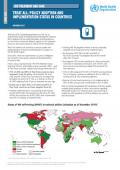
This fact sheet present data for 194 WHO Member States – including 139 low- and middle-income countries – and 35 Fast-Track countries, respectively through November 2017.