



What's New
Displaying results 41 - 50 of 4924
Resource | Publications,
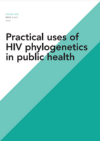
Phylogenetic approaches have been used to study HIV biology and epidemiology since the early 1980s. In the last 15 years, advances in sequencing have led to an increase in the information obtained and a sharp drop in costs, making it feasible to use phylogenetics in larger studies and public health HIV surveillance programmes. This is the second brief in a series of three on HIV phylogenetics.
The first brief, The Application of Phylogenetics to HIV—Insights into Biology and Epidemiology of HIV, explains the methods and approaches used to generate genetic and phylogenetic data and analyses. This brief summarises the ways in which phylogenetic (and other sequence-based) analyses are currently being used and reflects on how they could be used in the future in the field of HIV research and public health. The third brief discusses the ethical challenges of using HIV phylogenetics in research and public health surveillance.
Resource | Publications,
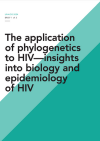
Phylogenetics is the study of the evolution of organisms based on their genetic similarity. Phylogenetic techniques, laboratory methods to read genetic code present in all living organisms, can be used to compare different species or to compare different members of the same species. They can also be used to compare viruses like HIV. Phylogenetic techniques are used to detect the subtle changes that occur in the genetic code of each organism from one generation to the next. These changes are particularly pronounced in HIV making it a good candidate for phylogenetic studies.
This brief introduction to HIV phylogenetics is the first of three briefs on the phylogenetics of HIV. This brief introduces phylogenetics, explains how the genetic code can be read, and shows how the sequences can reveal insights into HIV biology and epidemiology.
Resource | Presentations,
Get an overview of the HIV/AIDS situation in Mongolia. Browse and view charts and graphs illustrating data on the country's basic socio-demographic indicators, HIV prevalence and epidemiology, risk behaviors, vulnerability and HIV knowledge, HIV expenditures, and national response.
Resource | Publications,
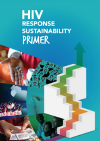
Achieving the 2025 and 2030 goals will require strong political leadership and the active engagement of people living with HIV and key and vulnerable populations across multiple sectors. Resources will need to be mobilized from both domestic and international sources. Sustainability will require different measures and approaches in diverse settings, highlighting the importance of tailoring sustainability planning and implementation for specific contexts, with existing efforts being leveraged. Flexibility and resilience will be essential in the face of changes in national HIV epidemics as well as in economic, political and social contexts.
This Primer document outlines a new approach to planning and implementing sustainable national HIV responses, that aims to galvanize efforts and to drive sustainable HIV Response transformations to reach and maintain epidemic control beyond 2030, by upholding the right to health for all. Through country driven and owned processes based on the most recent data, countries will develop specific HIV Response Sustainability Roadmaps. These Roadmaps will identify high-level outcomes across key domains of sustainability, including political leadership, quality access to services, system capacities, enabling policies, and domestic and international financing.
Resource | Presentations,
Get an overview of the HIV/AIDS situation in Maldives. Browse and view charts and graphs illustrating data on the country's basic socio-demographic indicators, HIV prevalence and epidemiology, risk behaviors, vulnerability and HIV knowledge, HIV expenditures, and national response.
Resource | Presentations,
Get an overview of the HIV/AIDS situation for Children in the Asia-Pacific region. Browse and view tables, charts and graphs illustrating data on HIV infections, treatments for this population.
Resource | Presentations,
Get an overview of the HIV/AIDS situation in Iran. Use on top right side to browse and view charts and graphs illustrating data on the country's basic socio-demographic indicators, HIV prevalence and epidemiology, risk behaviors, vulnerability and HIV knowledge, HIV expenditures, and national response.
Resource | Presentations,
Get an overview of the HIV/AIDS situation in Fiji. Browse and view charts and graphs illustrating data on the country's basic socio-demographic indicators, HIV prevalence and epidemiology, risk behaviors, vulnerability and HIV knowledge, HIV expenditures, and national response.
Resource | Presentations,
Get an overview of the HIV/AIDS situation in Lao PDR. Browse and view charts and graphs illustrating data on the country's basic socio-demographic indicators, HIV prevalence and epidemiology, risk behaviors, vulnerability and HIV knowledge, HIV expenditures, and national response.
Resource | Presentations,
Get an overview of the HIV/AIDS situation in Viet Nam. Browse and view charts and graphs illustrating data on the country's basic socio-demographic indicators, HIV prevalence and epidemiology, risk behaviors, vulnerability and HIV knowledge, HIV expenditures, and national response.