

What's New
Displaying results 81 - 90 of 4924
Resource | Publications,
The assessment serves to document and review the situation in relation to the current human rights and gender related programmatic responses being implemented across the country, aimed at reducing barriers to services for key populations. For the purpose of this assessment the main key populations in Bangladesh include female sex workers (FSW), people who use drugs and populations with diverse sexual orientation, gender identity, and sexual characteristics and expression (SOGIESC) such as men who have sex with men (MSM), male sex workers (MSW) and Transgender people/Hijra/Third Gender (TG).
Resource | Publications,
The Bangladesh government is committed to limit the prevalence of HIV and sexually transmitted infections (STIs) among key populations (KPs) at a low level. The current mapping, size estimation, and behavioral survey was conducted among the KP groups, namely, female sex workers (FSW), people who inject drugs (PWID), and men who have sex with men(MSM/MSW). Regular updates of the estimated KP size and their mapping are important for planning, priority setting, designing effective interventions, resource allocation, and monitoring.
The objectives of this study were to: a) estimate the size and map the sites of KP groups in selected districts and extrapolate the data to estimate the size in remaining districts; b) assess the risk behaviors of KP groups, including the utilization of services; and c) examine violence against the KPs, the situation of KPs during the COVID-19 pandemic period, and the knowledge of KPs on HIV and their health seeking behaviors.
Resource | Publications,
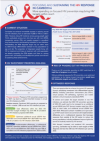
Cambodia has achieved remarkable success in reducing annual new HIV infections, from an estimated 15,000 in 1996 to 1,400 in
2022. However, rising HIV incidence among young people aged 15-24, particularly among men who have sex with men (MSM),
transgender women (TG), and people engaged in sexualized drug use (chemsex) is counteracting reductions in new infections.
Resource | Publications,
This study was conducted from January to March 2023 with funding support through the Technical Support Mechanism of UNAIDS and was made possible through consultation and collaboration with national and international partners, as well as communities of key populations and people living with HIV.
Resource | Fact Sheets,
HIV country profiles are based on data reported by countries which are published as part of UNAIDS' Data Book. HIV country profiles provide an overview of the latest available data on the HIV epidemic and response in the countries from 2023.
Resource | Fact Sheets,
HIV country profiles are based on data reported by countries which are published as part of UNAIDS' Data Book. HIV country profiles provide an overview of the latest available data on the HIV epidemic and response in the countries from 2023.
Resource | Fact Sheets,
HIV country profiles are based on data reported by countries which are published as part of UNAIDS' Data Book. HIV country profiles provide an overview of the latest available data on the HIV epidemic and response in the countries from 2023.
Resource | Fact Sheets,
HIV country profiles are based on data reported by countries which are published as part of UNAIDS' Data Book. HIV country profiles provide an overview of the latest available data on the HIV epidemic and response in the countries from 2023.
Resource | Fact Sheets,
HIV country profiles are based on data reported by countries which are published as part of UNAIDS' Data Book. HIV country profiles provide an overview of the latest available data on the HIV epidemic and response in the countries from 2023.
Resource | Fact Sheets,
HIV country profiles are based on data reported by countries which are published as part of UNAIDS' Data Book. HIV country profiles provide an overview of the latest available data on the HIV epidemic and response in the countries from 2023.