

What's New
Displaying results 21 - 30 of 4924
Resource | Publications,
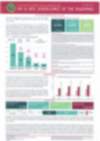
In March 2023, there were 2,078 confirmed HIV-positive individuals reported to the HIV/AIDS & ART Registry of the Philippines (HARP)2, of which, 498 (24%) had clinical manifestations of advanced HIV infection34 at the time of diagnosis. This was a 35% increase compared to the same reporting period last year. Moreover, there were 770 (37%) cases reported this month that were supposed to be confirmed from the previous months.
Resource | Publications,
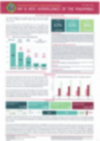
In May 2023, there were 1,256 confirmed HIV-positive individuals reported to the HIV/AIDS & ART Registry of the Philippines (HARP) and were accounted to the total (116,504) reported cases since January 1984. Moreover, 323 (26%) of individuals reported in May had an advanced HIV infections at the time of diagnosis. There were 132 deaths that were newly reported this year.
Of the total reported cases this period, 1,186 (94%) were male while 70 (6%) were female. Moreover, 707 (56%) were cisgender, 27 (2%) were transgender women, seven (1%) identified as others, two (<1%) as neither man nor woman, and 513 (41%) had unknown gender identity'.
Resource | Publications,
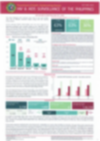
In April 2023, there were 1,240 confirmed HIV-positive individuals reported to the HIV/AIDS & ART Registry of the Philippines (HARP) and were accounted to the total (115,248) reported cases since January 1984. Moreover, 335 (27%) of individuals reported in April had an advanced HIV infections at the time of diagnosis. There were 101 deaths that were newly reported this year.
Of the total reported cases this period, 1,164 (94%) were male while 76 (6%) were female. Moreover, 692 (56%) were cisgender, 21 (2%) were transgender women, 12 (1%) identified as others, one (<1%) as neither man nor woman, and 514 (41%) had unknown gender identity'.
Resource | Publications,
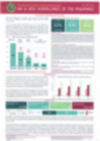
The latest Philippine HIV estimates show that by the end of 2023, there will be 189,000 estimated People Living with HIV (PLHIV) in the country.
Of the estimated PLHIV, 111,031 (59%) cases have been diagnosed or laboratory-confirmed and currently living or not reported to have died, as of June 2023.
Further, 70,916 PLHIV are currently on life- saving Anti-retroviral Therapy (ART), of which, 26,006 (37%) PLHIV have been tested for viral load (VL) in the past 12 months. Among those tested for VL, 22,690 (87%) are virally suppressed.
Resource | Publications,
The latest Philippine HIV estimates show that by the end of 2023, there will be 189,000 estimated People Living with HIV (PLHIV) in the country.
Of the estimated PLHIV, 115,568 (61%) cases have been diagnosed or laboratory-confirmed and currently living or not reported to have died, as of September 2023.
Further, 74,258 PLHIV are currently on life- saving Anti-retroviral Therapy (ART), of which, 33,727 (45%) PLHIV have been tested for viral load (VL) in the past 12 months. Among those tested for VL, 29,571 (88%) are virally suppressed.
Resource | Publications,
The latest Philippine HIV estimates show that by the end of 2023, there will be 189,000 estimated People Living with HIV (PLHIV) in the country.
Of the estimated PLHIV, 119,145 (63%) cases have been diagnosed or laboratory-confirmed and currently living or not reported to have died, as of December 2023.
Further, 75,300 PLHIV are currently on life- saving Anti-retroviral Therapy (ART), of which, 31,330 (45%) PLHIV have been tested for viral load (VL) in the past 12 months. Among those tested for VL, 27,468 (88%) are virally suppressed however only 36% were virally suppressed among PLHIV on ART.
Resource | Publications,
The evidence supporting U = U addresses the drivers of criminalization of HIV transmission by challenging the outdated norms that HIV infection is a death sentence and that HIV is easily transmitted to sexual partners.
HIV stigma and criminalization remain key barriers in many countries to reaching the targets in the 2021 Political Declaration on HIV and AIDS and the Global AIDS Strategy 2021–2026.
Resource | Publications,
As the UN's only cosponsored Joint Programme, UNAIDS has spearheaded a coordinated, multisectoral HIV response for nearly 30 years. The 2021 UN Political Declaration on HIV and AIDS, supported by UNAIDS' Global AIDS Strategy 2021-2026, charts a clear path to end AIDS as a public health threat by 2030. Taking this path is a sound political and financial choice that will save lives.
Resource | Publications,
On 1 January 2024, the Journal of Acquired Immune Deficiency Syndromes (JAIDS) published an article describing the findings from UNAIDS and co-authors on new HIV infections among key populations1 and their sexual partners in 2010 and 2022, by world region. For the first time, UNAIDS and partners have used expanded data sources and refined, dynamic HIV transmission models to make estimates of new HIV infections with time trends within each country and key population.
This article, prepared by UNAIDS and partners, highlights the new methods used to gain a better understanding of new HIV infections among key populations. The article focuses primarily on the new methods and necessary improvements for future estimates. This document places the findings in the wider context of the AIDS epidemic and response for their advocacy and programmatic use. For additional information, data and nuances it is suggested to refer to the full article.
Resource | Publications,
In 2019, UNAIDS published Health, rights and drugs: harm reduction, decriminalization and zero discrimination for people who use drugs which laid out the irrefutable evidence that people who use drugs were being left behind in the HIV response. The report demonstrated how the war on drugs was failing in its efforts to reduce the supply and demand of illicit substances, while at the same time causing untold harm to the health and well-being of people who use drugs. In 2024, five years later, the data show that people who inject drugs are still being left behind in the response. In 2022, the global median HIV prevalence among people who inject drugs was 5% across 50 reporting countries, seven times higher than among the rest of the adult population (aged 15–49 years). This figure hides significant geographical and population-based disparities. Among reporting countries, HIV prevalence ranged from 0% to 51%. Among the 16 countries with gender disaggregated data, the reported median HIV prevalence among men who inject drugs was 9%, while it was nearly double (15%) among women who inject drugs. There is some good news: the Global AIDS Strategy 2021–2026: end inequalities. end AIDS contains, for the first time, targets on law reform, reduction in stigma and discrimination, and community leadership in the response. In 2023, a United Nations Human Rights Council resolution on drug policy included explicit support for harm reduction and decriminalization for people who use drugs.