




Publications on Migrants
Resource | Publications,
Migratory trends, economic push-pull factors, HIV epidemiological data, legal and policy environments, as well as national/regional HIV programming are all essential elements of any discussion on HIV and migration. This review will touch on all of these elements in a limited fashion while focusing on two high-volume migratory corridors that reflect the current trends in HIV epidemiology among migrant and mobile populations in Asia and the Pacific.

Resource | Presentations,
A compilation of the epidemiology data and graphics contained in the Gap report on migrants.
Resource | Fact Sheets,
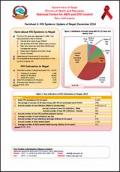
-The first HIV case was detected in 1988. The key populations are as follows:
People who inject drugs (PWID)
Sex workers and their clients (Male and Female)
Men who have Sex with Men (MSM) and transgender people
Male Labor Migrants and their wives
Prison Inmates
- Heterosexual transmission is dominant
- HIV prevalence among adult population in the country is below 1%
Resource | Publications,
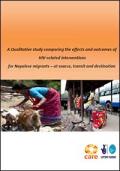
The qualitative study, commissioned by Care Nepal, sought to explore the effects and outcomes of the EMPHASIS project, launched four years ago to reduce HIV and AIDS vulnerability among cross border migrants; and to influence national and regional policies relating to safe mobility through evidence generated regionally.

Resource | Fact Sheets,
There are an estimated one billion migrants in the world today, which include 232 million international migrants and 740 million internal migrants. Tuberculosis (TB) imposes great human suffering and loss. 9 million people fell ill with TB worldwide in 2013, with 1.5 million deaths.

Resource | Publications,
This document is a summary report of the Post 6th ASEAN Forum on Migrant Labour GMS Consultation Workshop on good practice to improve existing complaint mechanism held on 15-16 August 2014 at Phnom Penh, Cambodia.

Resource | Publications,
The EMPHASIS project (Enhancing Mobile Populations’ Access to HIV and AIDS Services, Information and Support) has provided a diverse range of services to cross-border migrants in India, Nepal and Bangladesh over the past five years.
Resource | Publications,
A comprehensive and context-specific approach is required to tackle migrants’ vulnerabilities including addressing issues related to safety and dignity, rights and entitlements, as well as HIV and broader health-related challenges.

Resource | Publications,
While mobility itself is not seen as vulnerability factor for HIV infection, the unsafe conditions under which people migrate exposes them to a greater risk of infection. Similarly, those left at home may also face loneliness and exclusion. This briefing focuses on the situation across three South Asian countries, Nepal, Bangladesh and India.

Resource | Publications,
China is both a source and destination country for migration in the Greater Mekong Sub-region (GMS). Chinese migrants work in all GMS countries, primarily as professional or low-skilled workers employed in Chinese companies along the GMS economic corridors or as informal sector workers and small traders.