




Publications on Prisoners
This package forms part of a broader series of interventions to find and treat all people with TB, particularly those who currently face barriers to accessing TB services or completing TB treatment, and to support an enabling environment for overcoming the various legal, social and economic barriers that people affected by TB encounter.
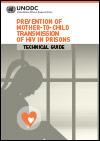
The rise in the global female prison population, women’s unique vulnerabilities to HIV infection and insufficient provision and inequitable access to HIV services places the prevention of motherto-child transmission (PMTCT) in prisons high on the agenda of HIV prevention among key populations.
This technical guide is intended to support countries in their efforts to increase their capacity to eliminate mother-to-child transmission of HIV in prison, and achieve the ultimate goal of ending AIDS as a public health threat by 2030, “leaving no one behind”.
This technical brief describes how HIV and TB interventions for people in prison and other closed settings can be incorporated into funding requests to the Global Fund. The Global Fund supports evidence-and rights-based interventions aimed at ensuring access to HIV and TB prevention, treatment, care, and support for key populations, including people in prison.
The Covid-19 crisis has highlighted the dire situation of overcrowded prisons and triggered discussions about alternative sanctions that effectively reduces crime rates and recidivism while ensuring health and safety of the prison population. Women, particularly in Asia, are incarcerated at an increasing rate and for non-violent offenses. This brief explores the use of early release and alternative sentencing to effectively curb populations, thereby reducing the threat of Covid-19 due to overcrowding.

The report documents a record 11 million people in prison worldwide, with over 124 prisons exceeding their maximum occupancy rate. Global Prison Trends shows how this increase in numbers is driven by a punitive approach to criminal justice where more costly prison sentences are favoured over non-custodial alternatives.
The overcrowding and underfunding of prisons, alongside the overuse of imprisonment, has resulted in poor health services and sanitary conditions for prisoners that make people in prison and prison staff acutely vulnerable to COVID-19.
While legitimate measures in times of such an emergency are needed to prevent further outbreaks of COVID-19 in prisons, authorities need to ensure human rights are respected. In such anxious times it is even more pertinent that people are not cut off from the outside world, they do not end up in solitary confinement, and most of all they have access to information and adequate healthcare provision – equal of that available in the community.
Ensuring the safety and health of both prison staff, and people deprived of liberty, requires urgent action to reduce the risks and consequences of widespread COVID-19 infection. This advocacy note makes recommendations for reducing such risks and consequences, including by early release from, and suspension of arrests and admission into, prions, jails and other detention settings including drug rehabilitation centres in Southeast Asia.
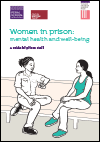
This guide is written to help understand how life in prison can affect a person’s mental health, with a focus on women. It describes how to recognise the signs of poor mental health and how best to respond. The guide aims to break down the stigma and discrimination attached to poor mental health, especially for women in prison.
The On the A-Gender: Community Monitoring Tool for Gender-Responsive Harm Reduction Services for Women who use Drugs aims to be a resource for community advocates to begin documenting, evidencing, and addressing this state of play. By doing so, community advocates can begin to identify areas and locales where gender-responsive services are severely lacking or identify services and programmes that can provide examples of good practice and be scaled up. The tool acknowledges the diversity and intersectionality of women who use drugs — including sex workers, lesbian and transwomen.

Communities make an invaluable contribution to the AIDS response. Communities of people living with HIV, of key populations—gay men and other men who have sex with men, people who use drugs, sex workers, prisoners, transgender people and prisoners—and of women and young people lead and support the delivery of HIV services, defend human rights, support their peers. Communities are the lifeblood of an effective AIDS response and an important pillar of support.